SLA-backed response times
P0 critical incidents: 30-minute response. P1 high: 2 hours. P2 medium: 4 hours. P3 low: next business day. Written into every engagement agreement.
Application maintenance, 24/7 incident response, security patching, and version upgrades with written SLA commitments. We take operational responsibility for your production systems so your team can focus on building new value. Retainer clients track tickets, SLAs, and invoices in SyncUp, the same portal used during the build.
30min
P0 response SLA
99.9%
Uptime commitment
Monthly
Health reports
24/7
On-call coverage
Written SLA with defined response times
24/7 monitoring and on-call rotation
Monthly dependency security scanning
Quarterly technical debt reviews
Incident post-mortems within 24 hours
P0 critical incidents: 30-minute response. P1 high: 2 hours. P2 medium: 4 hours. P3 low: next business day. Written into every engagement agreement.
Monthly dependency scans with automated PRs via Dependabot/Renovate. High and critical CVEs patched within 48 hours of vulnerability disclosure.

Uptime, incident count, mean time to resolution, error rates, and performance trends, delivered to stakeholders monthly with recommendations.

Every operational procedure documented, incident response, deployment, rollback, and common debugging guides, accessible to the entire team 24/7.

Blue-green or canary deployment strategies for all production releases. Rollback procedures tested and documented so they can be executed under pressure.

All production changes reviewed and approved before deployment. Change freeze windows before major events or peak periods documented and communicated.
01
3–5 days
Technical audit of the application, architecture review, dependency vulnerability scan, error log analysis, and performance baseline. Defines scope of managed service coverage.
02
1–2 days
Define response time SLAs by severity (P0–P4), uptime commitments, maintenance windows, and escalation paths. SLA document reviewed and agreed before engagement starts.
03
2–3 days
Instrument with Datadog or equivalent, uptime checks, error rate monitors, latency percentile alerts, and log aggregation. On-call rotation configured.
04
1 week
Knowledge transfer from existing team, runbook documentation, access provisioning, and a shadow period where we observe before taking primary responsibility.
05
Monthly
Proactive monitoring, scheduled dependency updates, monthly health reports, and incident post-mortems within 24 hours of any P0/P1 incident.
06
Quarterly
Quarterly engineering reviews identify technical debt, recurring incident patterns, and improvement priorities. Enhancement backlog maintained and prioritised by business impact.
Dependencies, API contracts, compliance constraints, and performance budgets documented before sprint one.
Two-week increments with GitHub access, demo recordings, and QA checkpoints, client visibility at every stage.
Automated tests on critical paths, security review, runbooks, and knowledge transfer to your team.
Tax-filing SaaS
Professional services firm
Package
Ideal for
Investment
Includes
Package
Ideal for
Post-launch platforms
Investment
Includes
Package
Ideal for
Engineering teams
Investment
Includes
Package
Ideal for
Revenue-critical apps
Investment
Includes
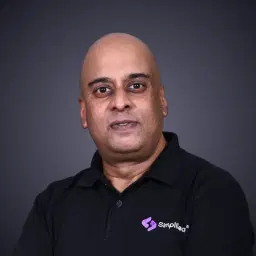

Company and Service positioning is reviewed for production delivery standards by Harsha Parthasarathy (Co-Founder, Strategy & Operations 24+ years IT veteran, IBM, Global Delivery, Program Management) and Keshav Sharma (Co-Founder, Engineering and Lead Architect, Full-stack engineering, product delivery and technical standards).
Simplileap Digital LLP
AAU-8582
DIPP83124Karnataka Startup
November 2020
Residency Rd, Bengaluru, India
Proactive monitoring and alerting, SLA-backed incident response, monthly bug fix cycles, scheduled dependency updates, security patching, and monthly health reports. Scope and SLAs are defined upfront in the engagement agreement.
On-call rotation via PagerDuty ensures coverage for P0 and P1 incidents 24/7. You receive an initial acknowledgement within the SLA window, regular status updates during resolution, and a written post-mortem within 24 hours.
Yes, we conduct a structured technical handover including codebase review, architecture documentation, runbook creation, and a shadow period. Most handovers complete within 2–3 weeks.
Framework version upgrades (Next.js, Node.js, etc.), security patches, dependency updates with compatibility testing, and database version upgrades. We batch non-urgent updates into monthly maintenance windows to minimise change risk.
Bugs are triaged by business impact (data loss risk, user blocking, cosmetic) and assigned to appropriate fix cycles. P0 data loss bugs addressed immediately; enhancement requests batched into monthly cycles with stakeholder input on priority.
Tell us what you're working on. A senior lead, not a sales rep, replies within one business day.