CMS & Platforms
- WordPress
- Shopify
- Webflow
- Wix
- Sanity
- Contentful
We build scalable, secure web platforms, custom applications, CMS-driven sites, e-commerce storefronts, and internal tools. Every project is delivered with the architecture, documentation, and observability that lets your team own it confidently after launch.
200+
Projects delivered
5+
Years in production
50+
Clients served
11+
Industries served
A website is a long-lived product, not a one-time deliverable. We design the architecture, documentation, and deployment model so the platform can be extended, handed to new teams, and scaled under traffic without the debt accumulation that forces costly rebuilds.
< 2.5s
LCP target
99.9%
Uptime SLO
A+
Sec headers
We choose the stack based on your specific SEO, editorial, integration, and performance requirements, not a default framework preference. Whether it is a headless Next.js platform with Sanity, a WordPress multisite, a Shopify Plus store, or a fully custom React and Node application, the decision is documented and justified.
Route-level rendering strategy (SSG, SSR, ISR, CSR) decided per page
Typed API contracts between frontend and backend from day one
CI/CD pipelines with automated quality gates before every deploy
Production observability, error tracking, uptime, performance RUM
Handover documentation that removes bus-factor risk
Best fit for
From platform builds to fully custom systems, we do not subcontract critical engineering.
01
CMS and commerce-platform builds with full custom theme/plugin/extension work.
02
Component-driven SPAs and server-rendered apps with design-system fidelity.
03
APIs, services, databases, auth, and integrations that power your product.
Phased modernisation of monoliths, end-of-life stacks, and unmaintainable codebases, without stopping the business.
Learn moreStack decisions are made to serve your requirements, not our comfort zone. The technologies below represent active delivery capability, not aspirational vendor logos.
Every web development project we ship meets these standards, not as optional add-ons, but as baseline requirements we build toward from discovery.

LCP under 2.5s, INP under 200ms, CLS under 0.1. We set performance budgets in the architecture phase and enforce them in CI.

HTTPS, CSP headers, OWASP Top 10 review, dependency scanning, secrets management, and RBAC. Not a post-launch checklist.

One H1, logical heading structure, canonical tags, structured data, sitemap, crawl-accessible routes, Core Web Vitals, and redirect mapping.

WCAG 2.1 AA: colour contrast, keyboard navigation, focus management, ARIA roles, and screen-reader testing across primary user flows.

Error tracking (Sentry), uptime checks, performance RUM, and analytics instrumented before launch, not retrofitted afterward.
Documented API contracts, environment configs, deployment runbooks, and clean separation of concerns so your team can own the platform confidently.
Seven phases, each with a clear output and a rollback path. No surprises at launch.
01
2–4 days
We document functional requirements, non-functional requirements (performance SLAs, accessibility, security), integration inventory, and failure modes. If replacing an existing system, a technical audit surfaces data migration risks, SEO continuity, and legacy dependencies.
02
3–5 days
Data models, API contracts, authentication strategy, hosting topology, caching layers, and CDN routing are defined before a line of application code is written. This document becomes the reference for scope, tech-debt, and future engineers.
03
Parallel with build
UX specifications are mapped to component contracts. CMS content models are defined with field types, validation, permissions, and editorial workflows. This prevents the classic gap where a beautiful Figma file produces inconsistent or unmaintainable code.
04
2-week sprints
Frontend, backend, and integrations are built in increments with demo-ready checkpoints every two weeks. Branch-based delivery, typed APIs, code review, and staging environments keep quality predictable rather than a quality-control surprise at the end.
05
Embedded throughout
Unit and integration tests for business-critical flows, end-to-end tests for key user journeys, Lighthouse performance audits, WCAG accessibility review, dependency vulnerability scan, and manual QA for edge cases.
06
3–7 days
Stakeholder sign-off on staging, redirect mapping, structured data, analytics verification, Core Web Vitals baseline, SSL, CSP headers, and any migration dry-runs. Launch has a clear rollback path and a communication plan.
07
Ongoing
Production cutover with zero-downtime deployment or maintenance window as required. Monitoring configured, runbooks documented, credentials transferred, and a stabilisation window of 2–4 weeks for post-launch issues. Internal teams receive a handover session and documentation package.
We do not just build and hand over. These engagements continue to support business outcomes months and years after launch.
Since 2020 we have worked alongside CTOs, VPs of Engineering, and Heads of Product at growth-stage companies and enterprises. The consistent feedback is not just about output quality , it is about how we reduce decision ambiguity, keep releases predictable, and leave teams in a stronger position than they started.
4.9 / 5
Clutch rating
Based on verified client reviews
200+
Web projects delivered
Marketing sites to SaaS platforms
< 48 hrs
Issue response time
On production incidents
On-time delivery
Across scoped projects
98%
“Simplileap team did an amazing job with our website. The process was seamless, the team truly understood what we are trying to communicate via our website as an EV mobility startup. The graphics and designs were superb, fully aligned with our larger brand identity. They made it extremely easy for my non technical staff to manage the website post hand over as well.”
Senior-only delivery team, no juniors assigned to complex projects without oversight
Architecture reviewed by an experienced technical lead before sprint one
Transparent project state, no surprises at launch or handover
Bangalore-based team available in IST, with overlap for EU and US timezones
Fixed-price and retainer models available, clarity on cost before commit
Simplileap builds production web platforms, custom Next.js apps, headless CMS, WooCommerce, and API-backed internal tools, with architecture, observability, and handover documentation your team can own.
Typical delivery: 6–10 weeks marketing sites · 12–20 weeks custom platforms
Dependencies, API contracts, compliance constraints, and performance budgets documented before sprint one.
Two-week increments with GitHub access, demo recordings, and QA checkpoints, client visibility at every stage.
Automated tests on critical paths, security review, runbooks, and knowledge transfer to your team.
Series B HR SaaS
B2B marketplace (Next.js monorepo)
Package
Ideal for
Investment
Includes
Package
Ideal for
Mid-market B2B
Investment
Includes
Package
Ideal for
SaaS & startups
Investment
Includes
Package
Ideal for
Regulated industries
Investment
Includes
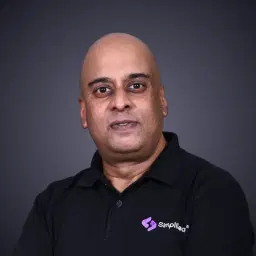

Company and Service positioning is reviewed for production delivery standards by Harsha Parthasarathy (Co-Founder, Strategy & Operations 24+ years IT veteran, IBM, Global Delivery, Program Management) and Keshav Sharma (Co-Founder, Engineering and Lead Architect, Full-stack engineering, product delivery and technical standards).
Simplileap Digital LLP
AAU-8582
DIPP83124Karnataka Startup
November 2020
Residency Rd, Bengaluru, India
We work across the full stack, React, Next.js, Vue, and Angular on the frontend; Node.js, Python/Django, PHP/Laravel, and Java/Spring Boot on the backend; WordPress, Shopify, and Webflow for platform builds; and PostgreSQL, MySQL, MongoDB for databases. Stack selection is driven by your SEO, editorial, scaling, and integration requirements, not a default preference.
We start with a technical and SEO audit: current traffic, indexed pages, inbound links, redirect chain health, page speed, analytics coverage, and CMS complexity. This determines the migration strategy, phased replacement, strangler pattern, or lift-and-shift, and defines rollback criteria and SEO continuity requirements before build starts.
A marketing website with CMS typically takes 6–10 weeks from discovery to launch. A custom web application with backend, auth, integrations, and admin takes 12–20 weeks depending on scope and integration complexity. We scope per-project and publish milestones at kickoff so there are no surprises.
Performance is designed in, not retrofitted. We set Core Web Vitals budgets during architecture, enforce them via CI Lighthouse checks, use server-side rendering or static generation where it benefits SEO, and optimise images, fonts, and scripts by default. Mobile-first responsive design and crawl-accessible routes are part of every project.
Both. Platform-based builds (WordPress, Shopify, Webflow) make sense when editorial control, ecosystem, and speed-to-market matter more than full custom flexibility. Custom builds suit unique workflows, complex integrations, multi-tenant systems, or products that will be extended heavily after launch. We recommend based on your specific needs, not our preferred stack.
A full handover includes: the production repository with branch structure and CI/CD pipelines, deployment runbooks, environment variable documentation, API contract docs or OpenAPI specs, CMS training if applicable, monitoring configuration, and a knowledge-transfer session. The goal is that your internal team, or any future company, can run and extend the codebase without us.
Security is embedded rather than audited at the end. We follow OWASP Top 10 guidelines, use parameterised queries, enforce least-privilege access, manage secrets via environment variables or secrets managers, scan dependencies for CVEs in CI, configure HTTP security headers (CSP, HSTS, X-Frame-Options), and document credential ownership. For regulated industries, we can produce a security-focused delivery checklist.
Yes, and this is a large share of our work. Internal tools, customer portals, admin dashboards, reporting systems, and SaaS backends follow the same architecture standards as public-facing products: typed APIs, role-based access, observability, CI/CD, and documentation.
All projects include a 2–4 week stabilisation window at no additional cost. After that, we offer Managed Services for ongoing maintenance, performance reviews, feature additions, and monitoring. Clients can also take full ownership, the handover documentation is designed to support that.
We offer project-based pricing for scoped deliverables and retainer models for ongoing build or managed services. Pricing depends on scope, complexity, and timeline requirements. We provide a detailed proposal after a discovery call. See our Pricing page for engagement model details.
Share your project brief with our Bangalore team. We respond within one business day with a clear path from discovery to production.